
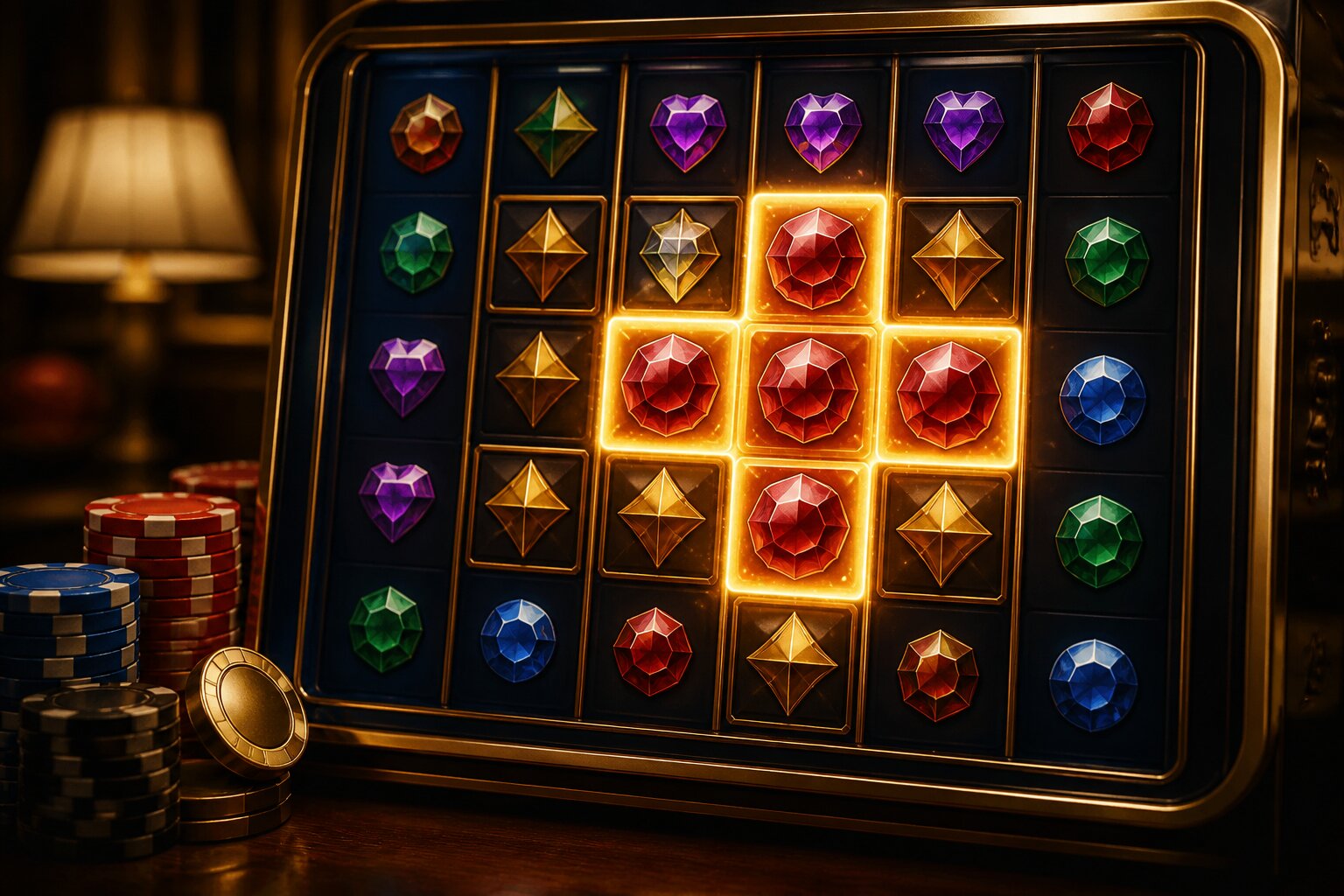
Looking for something new in online slots? Grid slots and cluster pays swap the familiar reel-and-payline structure for a grid-based layout and wins formed by groups of matching symbols.
These games can look puzzling at first, but once you grasp the basics — how clusters form, how symbols cascade, and what bonus features appear — the design choices start to make sense. This guide explains what sets grid slots apart, how cluster pays work, the common mechanics you’ll encounter, and what to bear in mind before you play.
Read on for clear explanations and practical context that make these games easier to follow and more enjoyable to explore.
What Are Grid Slots & How Do They Differ From Traditional Slot Games?
Grid slots are set on a grid — commonly 5x5 or larger — rather than on a set of spinning reels. Symbols populate individual cells, and wins are formed by groups of identical symbols touching one another horizontally or vertically.
The key difference from traditional slots is that there are no fixed paylines. Wins can appear anywhere on the grid, which opens up many more combinations and a different rhythm to gameplay. Many grid games also use cascading mechanics: when a winning group disappears, new symbols drop in from above and can form further wins within the same round.
This structure changes the emphasis of play. Instead of aiming for specific lines, players watch how the grid evolves and how one result can trigger another in quick succession.
How Do Cluster Pays Work?
Cluster pays replace paylines with winning groups of adjacent matching symbols. Typically a minimum number — often five — must connect horizontally or vertically for a cluster to count.
When a cluster forms, the game consults its paytable to determine the payout, which depends on both the symbol type and the cluster size. After the win is awarded, those symbols are removed and new symbols fall into place, so a single spin can lead to multiple wins as chains of clusters are created.
The randomness of each spin is governed by the game’s RNG, meaning outcomes are independent from one spin to the next. Because cluster composition and position matter, reading a game’s paytable helps you understand how much different symbols are worth and what cluster sizes are rewarded most.
Key Features of Grid Slots & Cluster Pays Games
Grid slots commonly introduce mechanics that shape how play develops and keep rounds interesting.
Cascading wins are central: wins disappear and new symbols drop in, which can start additional wins without requiring another press of the spin button. Some titles have expanding grids that add extra cells as certain conditions are met, broadening the field for cluster formation and creating a sense of progression.
Special symbols such as wilds can substitute for others to help complete clusters, while multipliers, bombs, or symbols that upgrade neighbouring icons add variety to how clusters resolve. Many games also include meters or progressive features that unlock new elements as you build consecutive wins.
These features are design tools to change the pace and reward structure of a game; their effects are defined in the rules and paytable, and they work alongside the core cluster mechanics.
How Is Gameplay Structured in Cluster Pays Slots?
Gameplay centres on watching the grid evolve. You set your stake, start a round, and symbols fill the grid; any qualifying clusters are identified and paid according to the paytable. Winning symbols clear, replacements drop in, and the process repeats until no new clusters appear.
Bonus features, when present, alter this flow by introducing additional wilds, extra multipliers, or free spins-style rounds with modified rules. But the core cycle — symbols fill the grid, clusters are evaluated, and cascades occur — remains consistent across most cluster pays titles.
This structure tends to produce fast, eventful rounds where a single entry can produce several consecutive wins and visible changes to the playfield.
Understanding Grid Slot Mechanics
Grid slots rely on a combination of the grid layout, symbol weights, and the paytable to determine outcomes. A random number generator controls symbol placement each round, ensuring that results follow the rules set by the game’s design rather than any external influence.
Win calculations are straightforward: the software scans the completed grid for clusters meeting the minimum size, then applies the paytable values for each symbol to calculate payouts. Multiple separate clusters are each evaluated, and any applicable multipliers or modifiers from special symbols are applied according to the game’s rules.
Being familiar with a game’s paytable and feature descriptions helps clarify how a cluster of a given size translates into a payout, and how special symbols alter those calculations.
Common Bonus Features & Special Symbols in Grid Slots
Many grid games layer additional mechanics on top of the basic cluster system to make results more varied and engaging.
Wild symbols substitute for others to help form or improve clusters. Scatter-type symbols typically trigger bonus rounds when enough appear, and free spins or free-drop modes often run with the same cluster mechanics but with extra enhancements like boosted wild frequency or higher multipliers. Multipliers, bombs, and symbol upgrades are other common modifiers that change cluster outcomes by increasing payouts or altering symbol distributions.
These features interact with the core mechanics in different ways depending on the title, so checking how each symbol behaves in the game’s rules gives a clearer picture of what to expect during play.
What Should Players Know Before Playing Grid Slots & Cluster Pays?
Several practical points help set expectations for this genre.
Volatility describes how frequently and how large wins tend to be. High-volatility titles may offer less frequent but larger cluster payouts, while low-volatility games generally return smaller amounts more often. Return to Player (RTP) is an averaged percentage shown in a game’s information; it indicates long-term return across many plays and doesn’t predict individual sessions.
It’s also easy to become absorbed in the cascading action, so keeping an eye on session length and spending helps maintain control. Most platforms provide tools for managing stakes and time; using them supports measured play and aligns activity with personal limits.
Taken together, understanding volatility, RTP and the available account tools helps you choose games that suit your preferences and manage play responsibly.
Myths & Misconceptions About Cluster Pays Slots
A few persistent misconceptions can skew expectations about how these games behave. For example, the idea that a game will “owe” a win after a dry spell misunderstands the independence of each round: previous results do not influence the next outcome. Similarly, imagining that particular on-grid patterns indicate an impending result overlooks how random symbol distribution works within a game’s rules.
Beliefs that longer play increases chance of success also misrepresent how volatility and RTP function. RTP gives a long-term average, not a short-term guarantee, and volatility affects how results are distributed over time rather than changing the underlying randomness.
Understanding these points keeps expectations realistic and helps you appreciate grid slots and cluster pays as a distinct style of play with its own mechanics and rhythms. If you want to try a few titles, read the paytable and feature notes first to see which mechanics you prefer — that’s the best way to find games that match your taste.
**The information provided in this blog is intended for educational purposes and should not be construed as betting advice or a guarantee of success. Always gamble responsibly.