
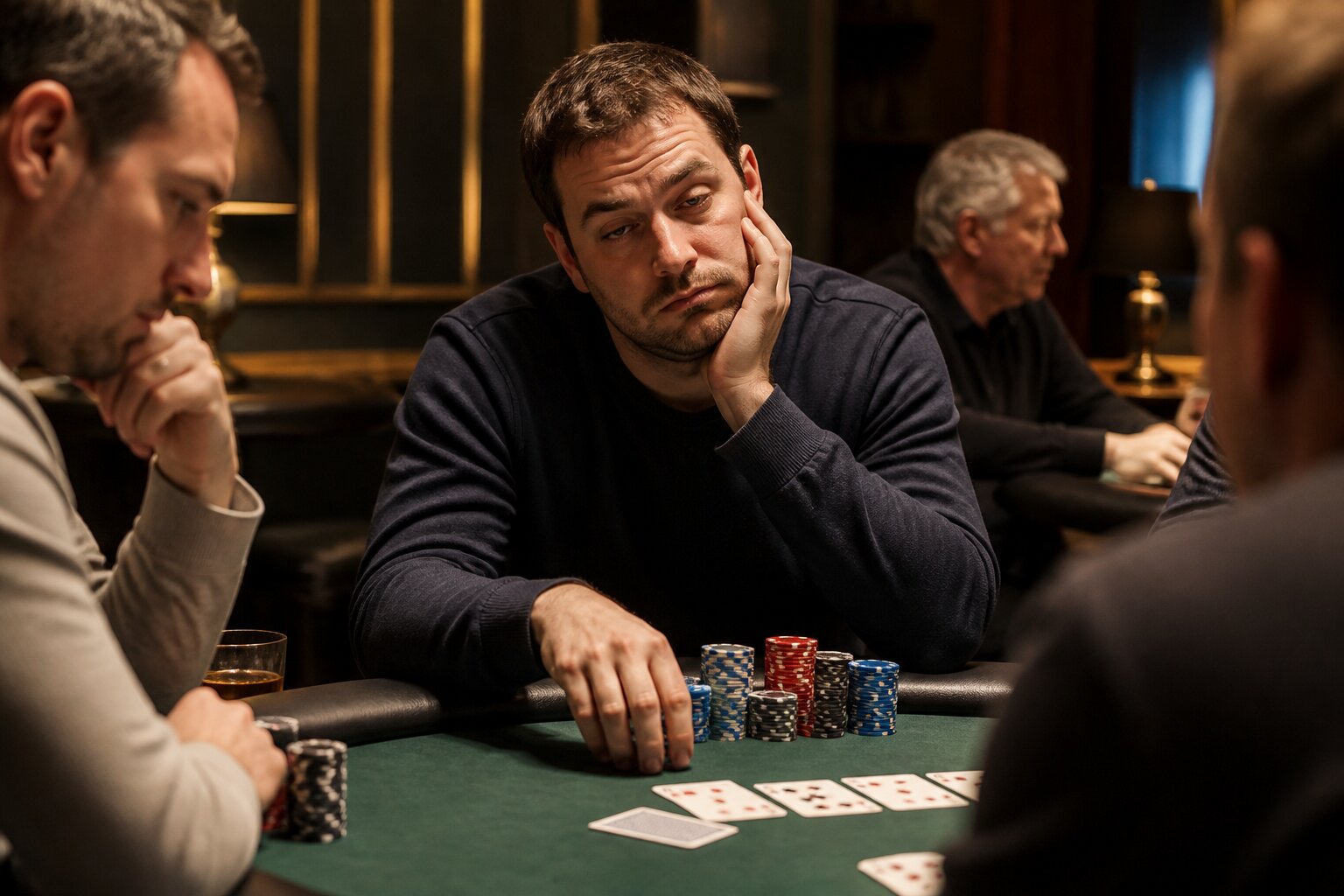
Ever found yourself at a poker table wondering why someone keeps calling every single bet, no matter how strong or weak their hand seems? You’re not alone. Most regular players will recognise that person who can’t seem to fold and loves to ‘see the next card’ — even when the odds aren’t in their favour.
It’s frustrating and interesting in equal measure. Understanding who a calling station is and how they play will help you adapt your own strategy at both live and online tables, whether you’re playing small-stakes cash games or stepping up to higher limits. Read on to learn how to spot them, what hands they play, and the practical ways to counter their style.
Definition of a Calling Station in Poker
A calling station is a player who calls bets and raises frequently but rarely raises themselves or folds, regardless of hand strength. They tend to match bets to see later community cards rather than folding under pressure or using aggressive tactics to take control of the pot.
Contrasting with aggressive players who bet and raise to seize the initiative, or tight players who commit chips mainly with premium hands, a calling station is defined by passivity and a willingness to stay in hands. They often call down to the river with modest holdings instead of conceding the pot when the action indicates they are behind.
For example, in a £1/£2 cash game the flop comes Queen, Jack, 7 and a calling station will often remain through turn and river betting rounds, showing only a small pair or no improvement at showdown. That consistent tendency to call every street is the hallmark that distinguishes them from other player types, and it’s what you’ll want to exploit when it suits your cards.
Key Traits of a Calling Station
Once you know what to look for, calling stations become easy to identify by the patterns they repeat. Their behaviour is consistent rather than occasional, and that predictability shapes how you should react.
Common traits include:
- Calling almost every bet, from pre‑flop through to the river.
- Seldom folding even when the board and betting point to an opponent’s strength.
- Rarely raising, which means they miss opportunities to build pots or apply pressure.
- Frequently seeing showdowns with weak or average hands.
- Paying little attention to opponents’ betting patterns or physical tells.
- In online play, showing up in hand histories as frequent callers reaching rivers without aggressive actions.
- In live games, often quietly matching bets and buying chips to keep playing.
Spotting those patterns quickly gives you the chance to switch into a value-focused approach when you have a strong hand. The next section explains why so many players fall into this style.
Why Do Players Become Calling Stations?
A mix of motives and habit typically produces the calling station profile. For many recreational players, the social and entertainment side of poker outweighs strict strategic thinking; they want to stay in the action and enjoy more showdowns. Others simply haven’t learned the full value of folding, raising or betting with intent.
Risk aversion plays a part too. Some players find folding uncomfortable and prefer to match bets rather than concede, while others believe any hand can improve and so keep calling. There are also players who consciously choose this style because they like the straightforward, low-pressure approach of calling rather than leading pots.
These different causes mean calling stations aren’t all the same: some lack experience, others are deliberate in their approach, and a few are stubbornly set in their habits. Understanding the reason behind a player’s style can help you predict how they’ll act in certain spots, and that leads neatly into the sorts of hands they tend to play.
Types of Poker Hands Calling Stations Play
Calling stations typically play a wide range of speculative and marginal hands that stronger or more disciplined players would often fold. That breadth of holdings explains why they show down so frequently.
Examples you’ll commonly see include:
- Weak pairs: holdings such as 7♣‑4♦ or small pairs that become bottom or middle pair on the flop.
- Any draw: flush and straight draws are often chased even when the odds aren’t favourable.
- Overcards: hands like K♦‑Q♠ or A♣‑J♦ that missed the flop but remain in the pot hoping to pair up.
- Second or third pair: continuing with hands that are likely only average on the board.
- Ace‑anything: starting hands containing an ace are less likely to be folded, regardless of kicker.
- Gutshot draws: unlikely straight draws that are still chased in the hope of completion.
- Random two cards: pre‑flop calls with hands like 10♣‑3♦ or 6♥‑2♠ simply to see the flop.
This wide selection of calling-worthy hands explains why calling stations reach showdowns often and why straightforward value betting tends to work best against them. With that in mind, the next section shows how to recognise them at the table.
How to Spot a Calling Station at the Table
Recognising a calling station is largely about observation: watch how a player responds to bets across several hands rather than judging them on a single round. Live telltales include a player who keeps matching bets through turn and river action, rarely folding even when the pot grows large.
Online, statistics and hand histories reveal the pattern more quickly; a high call percentage and a low raise percentage are red flags. Indicators to watch for include:
- Frequent pre‑flop calls from early or late positions.
- Tendency to call large river bets and then show single‑pair or worse holdings.
- Remaining in pots despite clear, repeated aggression from others.
- An inclination to reach showdowns rather than letting opponents win uncontested.
Identifying these patterns early lets you plan how to extract value from them; the following section explains practical strategies for doing exactly that.
Playing Against a Calling Station: Essential Tips
Against calling stations, a simple, value-oriented approach is most effective. Because bluffing is unlikely to succeed, the focus should be on extracting value when you have strong hands and avoiding unnecessary risk with marginal holdings.
Bet for value when you have the best hand. If you hold top pair or better, press the advantage with consistent bets on each street to build the pot and get called. For instance, with A♠‑K♠ on a king‑high board, continuing to bet will often generate calls from worse hands.
Avoid elaborate bluffs. Calling stations rarely fold, so allocating chips to sophisticated bluffs is wasteful. If a draw misses on the river, letting go or accepting a smaller loss is usually preferable to attempting a large, unlikely bluff.
Mind your bet sizing. You don’t need to overbet to extract calls, but making sound, steady bets across streets will generally produce the most value. Tighten pre‑flop hand selection and favour holdings that can withstand calls from a broad range of worse hands.
Manage your bankroll: play at stakes appropriate to your budget and long‑term goals. That disciplined approach protects your session and keeps decisions clear-headed.
With those practical adjustments your edge against calling stations will grow; however, be aware that several misconceptions about these players can still sidetrack you.
Common Misconceptions About Calling Stations
There are a few persistent myths about calling stations that can lead to costly errors if accepted without thought.
- Calling stations are always easy to beat: Their predictable style can be exploited, but they sometimes win sizeable pots with unlikely holdings. Expect variance and remain disciplined rather than assuming guaranteed wins.
- Calling stations never have strong hands: They can and do hold monsters; the danger is assuming their passivity equals weakness in every hand.
- Bluffing always fails against calling stations: While bluff success is rare, very large bets on particularly scary boards can sometimes induce a fold — but relying on that is risky.
- All new or casual players are calling stations: New players vary widely; some are passive callers, others are over‑aggressive or fold too much. Judge behaviour, not background.
- Calling stations are always unaware of their style: Some are unconcerned and prefer to see showdowns; others are deliberate. Their motivation matters for how you play against them.
Recognising these misconceptions helps you remain realistic about both the opportunities and limits when facing calling stations. Played correctly, their habits create chances to extract value, but doing so successfully requires careful observation, sensible betting and disciplined bankroll control.
Enjoy Casino Games at Online Slots UK
We invite you to enjoy the pleasure of playing casino games with us in a welcoming online setting. With our easy-to-use site, you can look forward to an enjoyable experience whenever you choose to play.
Getting set up is straightforward: simply create your account, make a deposit and you are ready to explore our range of games. We hope you’ll have a fantastic time with us.
**The information provided in this blog is intended for educational purposes and should not be construed as betting advice or a guarantee of success. Always gamble responsibly.