
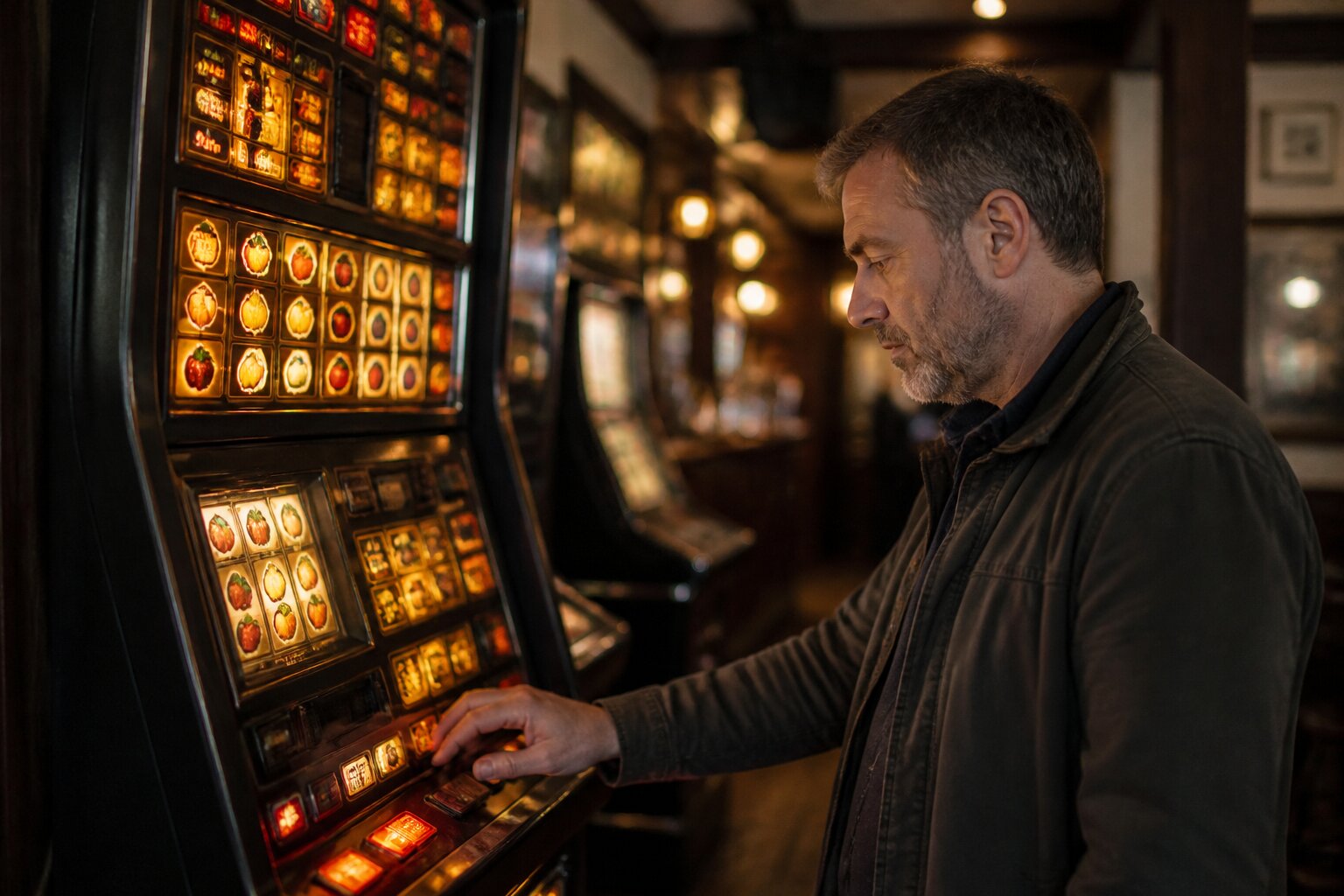
Ever strolled into a pub in Scotland and heard someone mention the "puggie"? If you usually recognise the jangle and bright lights of the local fruit machine, that nickname can catch you off guard. For generations, these spinning reels have been part of nights out across Britain, but north of the border their name takes on a distinctly Scottish flavour.
What sparked Scotland’s unique slang, and how did such a quirky word catch on? For many, a session on the puggie is as much a social ritual as it is a bet with friends, and the term has been stitched into local speech and communal life.
The story behind "puggie" is a small cultural mystery that leads into wider themes about language, leisure and the places where communities gather. Read on to see how a simple coin-and-reel machine became a marker of local identity and speech.
Fruit Machines in the UK: What Are They?
Fruit machines are familiar fixtures in pubs, arcades and licensed venues across the UK. These electronic gambling machines use reels with symbols such as cherries, lemons, bells and BARs; matching combinations can trigger payouts or prizes. Modern machines may also include bonus features, mini-games or mechanisms like holds and nudges that change how a single play can develop.
There are different categories of machine depending on stakes and prize levels, with pub machines typically offering lower stakes than those in casinos or adult gaming centres. By law, only adults may use these machines. The machines are regulated to ensure they meet standards for game behaviour and player protection.
Fruit machines began as simple coin-operated amusements and have been updated continually with new tech and design. That history helps explain why a variety of regional names, including "puggie," developed as people made these machines part of everyday social life. Next, we’ll look at the Scottish word itself and how it fits into local speech.
Exploring the Term “Puggie” in Scottish Slang
In Scotland, “puggie” is the informal word many people use for a fruit machine. It turns up most often in spoken conversation in pubs, arcades and community clubs, where someone might say, “I’ll have a go on the puggie,” or “The puggie’s paid out again.”
This slang carries local character and a sense of familiarity. It tends to be used casually rather than in formal writing, and it signals a particular social scene around shared pastimes. Hearing the word suggests a moment of communal leisure: people gathering, chatting and playing machines as part of a night out rather than as a formal activity.
Understanding how the word came into being helps explain both its endurance and its regional limits, which the next section explores.
Where Did the Name “Puggie” Come From?
The exact origin of “puggie” is not certain, but several plausible explanations point to early 20th-century Scotland. One commonly cited link is to an old Scots word “puggy,” meaning a money box or collection box. As mechanical slot machines collected coins, the association between coin receptacles and the machines seems natural, and historical references in regional newspapers use similar terminology when discussing small change and amusements.
Another hypothesis points to language contact. Italian families who ran or worked in amusement arcades could have contributed words such as the Italian "paghi," meaning “pay.” That word may have blended with Scots usage over time as these machines became more widespread.
Whatever the true root, the term most likely grew from everyday usage rather than a single origin story, reflecting how communities adapt language to new devices and habits. This linguistic history sets the scene for how the word sits alongside other regional terms for the same machines.
Regional Differences: Puggies vs Fruit Machines
Across the UK, "fruit machine" is the most common name, especially in England, Wales and Northern Ireland, deriving from the fruit symbols that first appeared on reel faces. In Scotland, however, “puggie” is the familiar option in many local conversations, particularly in pubs and working men’s clubs.
These regional differences are about speech rather than machine design. A “puggie” in Glasgow performs the same functions as a “fruit machine” in Manchester, but the language used to describe it reflects place and habit. You might hear someone in Glasgow say, “Let’s give the puggie a go,” while elsewhere the wording will be different.
The next section traces how these terms have changed alongside the machines themselves and the wider culture that surrounds them.
Historical Influence of Slot Machines in Scotland
Slot machines arrived in Scotland in the early 20th century and were quickly adopted into places where people met: amusement arcades, social clubs and, later, pubs. Early mechanical models often rewarded players with sweets or tokens rather than cash, and they fit into a pattern of affordable, informal entertainment during decades of industrial and urban life.
Electric fruit machines became more common from the 1960s onwards, finding a home in seaside arcades, bingo halls and local gathering spots. Legislation over the decades framed how and where machines could operate, shaping venues’ offerings and the stakes that were allowed. Through these changes, the machines remained visible elements of social spaces, and the vocabulary people used around them, such as “puggie,” remained part of that continuity.
The evolution of both machines and language shows how technology and regulation can influence local culture; next we’ll follow that thread into how the word itself shifted over time.
How Has the Term “Puggie” Evolved Over Time?
"Puggie" has shifted from everyday print and speech to a more nostalgic marker of local life. Mid-20th-century adverts and local papers commonly mentioned the term when noting new machines or entertainment openings, and it was tied to community venues where people met regularly.
As national advertising and official documents began to favour standard terms such as “fruit machine” or “gaming machine,” the use of “puggie” declined in formal contexts. It has persisted orally, though, especially among older generations and in central Scotland, where the word carries associations with particular social institutions and memories.
Today the term often appears in local stories and cultural pieces, signalling a connection to place and to how people once spent evenings together. That brings us to a broader look at regional gambling vocabulary in Scotland.
Other Examples of Gambling Slang in Scotland
Below are common terms used around betting and gambling in Scottish contexts; these items are presented as a reference list because they represent distinct concepts.
- Toss – A simple coin toss, used for informal decisions or small pub bets.
- Bookie – Short for bookmaker, a person or shop taking bets on sports, racing and other events.
- Coupon – A betting slip used to record selections at a bookmaker.
- Yankee – A multiple bet involving four selections and eleven component bets.
- Accumulator (Acca) – A wager that links several selections into one bet where every selection must succeed for a return.
- Lucky 15 – A multiple bet covering four selections with fifteen combinations.
These terms help map out the language around wagering and community pastimes in Scotland. Together they show how specialised vocabulary develops to describe different forms of play and betting. This overview completes the look at how a single piece of slang fits into a wider regional lexicon.
Play Online Slots at Online Slots UK
We’d love to welcome you to our site, where you can enjoy the excitement of our casino games and experience the fun at your own pace. Our friendly community is the perfect place for players who want quality entertainment.
Getting started with us is simple: just create your account, make your first deposit and you’ll be ready to play. We look forward to sharing all the enjoyment our site has to offer.
**The information provided in this blog is intended for educational purposes and should not be construed as betting advice or a guarantee of success. Always gamble responsibly.