
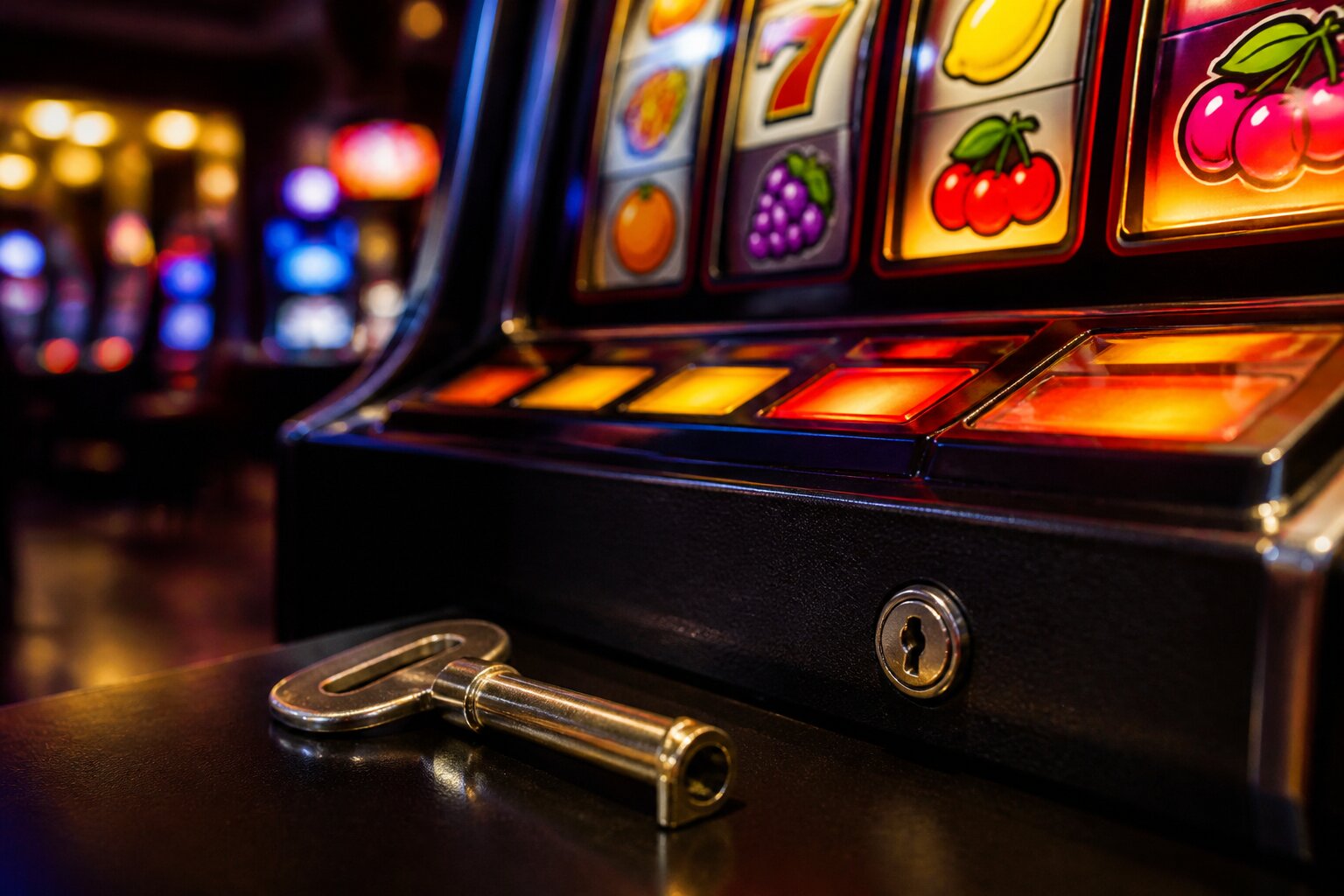
Ever wondered what actually goes on behind the glass of your local pub’s fruit machine? While most of us simply pop in a quid and spin the reels, there are tools and procedures that only operators and engineers handle. One of the most mysterious is the slot machine reset key — a small object that controls access to important parts of the machine.
You might have spotted a staff member using a small key to open a machine’s front panel or switch it back on after a large payout. These keys are not just for basic maintenance; they play a key role in how machines are managed, secured and kept in working order.
But what exactly does a reset key do, who can use them, and why are they still relevant in an increasingly digital world? The next sections explain how these keys work and why strict rules surround their use.
What Is a Slot Machine Reset Key?
A slot machine reset key is a small, physical key used to open certain panels or trigger functions on a fruit machine, slot or other gaming terminal. Typically made of metal, it resembles keys used for vending machines or filing cabinets and may carry a simple code to match a particular lock type, since machines from different manufacturers use different keys.
The main purpose of a reset key is to let trained staff or technicians access internal controls without causing damage. It is not intended to alter gameplay or give anyone an advantage; its role is maintenance, service and security.
Typical uses include resetting a machine after a major payout, clearing errors, or enabling access for inspections. Different keys can operate different parts: one for the cabinet door, another for the cashbox, and sometimes a separate key for service or diagnostic modes. In modern machines, key use is sometimes combined with a PIN to add another security layer.
Access to these keys is limited to authorised, licensed staff and engineers, and every interaction is expected to be recorded to meet regulatory requirements. This ensures machines remain secure and fit for public use. The following section describes how those keys interact with the machines themselves.
How Do Fruit Machine Keys Work?
Fruit machine keys are designed so that only authorised people can reach the machine’s internals. When a key is inserted into the designated lock — usually on a side or back panel — it completes a mechanical switch that releases a latch or enables a maintenance mode. That action is separate from the gameplay system.
Once the cabinet is open, staff may find a clearly marked reset button or an electronic switch. Using these controls allows a technician to clear error codes, restore service after a stuck payout mechanism, or run diagnostic checks. Some machines have multiple locks: one for routine access and another strictly for cashbox removal and auditing.
Modern machines often require both a key and a secondary verification, such as a PIN or authorised login, before allowing access to service menus. At every step, venues follow procedures for documenting key use so that audits and inspections can confirm the proper handling of equipment. Next, we look at the everyday purposes these keys serve in venues.
Common Uses for Reset and Fruit Machine Keys
Reset and fruit machine keys are practical tools that keep machines running reliably and legally. They are used to clear faults, prepare machines for collection after cash handling, and run service checks that confirm the unit is operating correctly.
A frequent scenario is a machine displaying an error after a jammed payout. A staff member will use the key to open the cabinet, identify the cause and reset the system so play can continue. Keys are also used during cash collection, where controlled access to the cashbox or hopper is required; venues typically employ two-person procedures and detailed logging to prevent errors or theft.
Technicians will use keys to put a machine into service mode and run test cycles, ensuring mechanical parts and software functions behave as expected. Keys also allow routine inspections to check for wear, replace components and attend to cleaning. These activities limit downtime and maintain compliance with regulatory requirements. To explore who is allowed to carry out this work, read on.
Are Reset Keys Used for Maintenance and Repairs?
Yes. Reset keys are central to everyday maintenance and repair tasks. When a reel sticks or a display acts up, authorised personnel open the cabinet, inspect components and perform repairs or resets to restore normal operation. These interventions are practical responses to mechanical or electronic faults and do not affect the game's fairness.
Can Keys Be Used to Access Machine Settings?
Some machines allow access to service menus and diagnostic features once a key is used to unlock the cabinet. In those cases, authorised staff can review error logs, check performance parameters and run settings checks within permitted limits. Such access is tightly controlled so only licensed operators and qualified engineers can view or alter those features.
Who Is Allowed to Use Slot Machine Keys?
Handling of slot and fruit machine keys is restricted to a defined group of people, usually licensed operators, authorised venue managers and accredited service engineers. These individuals work for pubs, arcades, betting shops or specialist suppliers and act under the terms of their licences.
Venue staff who legitimately need to use a key — for example to collect takings, fix faults or carry out scheduled maintenance — are trained and vetted. All key use should be logged and justified, with access procedures designed to keep the machine secure and the record of activity clear.
Members of the public are not permitted to have or use these keys. Unauthorised possession or use can amount to criminal behaviour and puts both the person and the venue at significant legal risk. The following section outlines what can happen when keys are misused.
Are Slot Machine Keys Misused or Abused?
Misuse of slot machine keys is treated seriously because it undermines machine security and can lead to criminal activity. Common problems include unauthorised individuals gaining access to keys and attempting to open machines to reach cash or tamper with components.
Another risk is deliberate interference with settings, payment trays or record keeping, which can lead to licence suspension, prosecution and severe penalties for those involved. To prevent such outcomes, venues enforce strict key control policies: only authorised staff handle keys, every use is logged, and regular audits are conducted to ensure no keys are missing.
If suspicious behaviour is observed around machines, venues encourage reporting so issues can be investigated promptly and the environment kept as safe and compliant as possible. That brings us to the legal framework that governs these practices.
Legal Status: Is It Legal to Own or Use Slot Machine Keys?
Under the Gambling Act 2005, owning or using slot machine keys is legal only when done by authorised individuals acting for authorised bodies, such as licensed premises or recognised service companies. Proper ownership and use must be clearly linked to legitimate business activity.
For those without the correct authorisation, possession of such keys is unlawful and can be treated as preparation to commit theft or fraud. Penalties include fines, prosecution and potential imprisonment. Licensed operators and suppliers maintain compliance by tightly controlling key distribution, keeping detailed records and ensuring that only trained, vetted personnel have access.
In short, these keys are legitimate tools for legitimate work, but they come with strict responsibilities and legal obligations. That close control protects venues, staff and the public while keeping machines in proper working order.
Discover Online Slots at Online Slots UK
We’d like to welcome you to Online Slots UK, where you can enjoy casino games made for entertainment. Join us and see what our site has to offer.
Getting started is simple: just create your account, make a deposit and you’re ready to play. We look forward to seeing you with us soon.
**The information provided in this blog is intended for educational purposes and should not be construed as betting advice or a guarantee of success. Always gamble responsibly.