
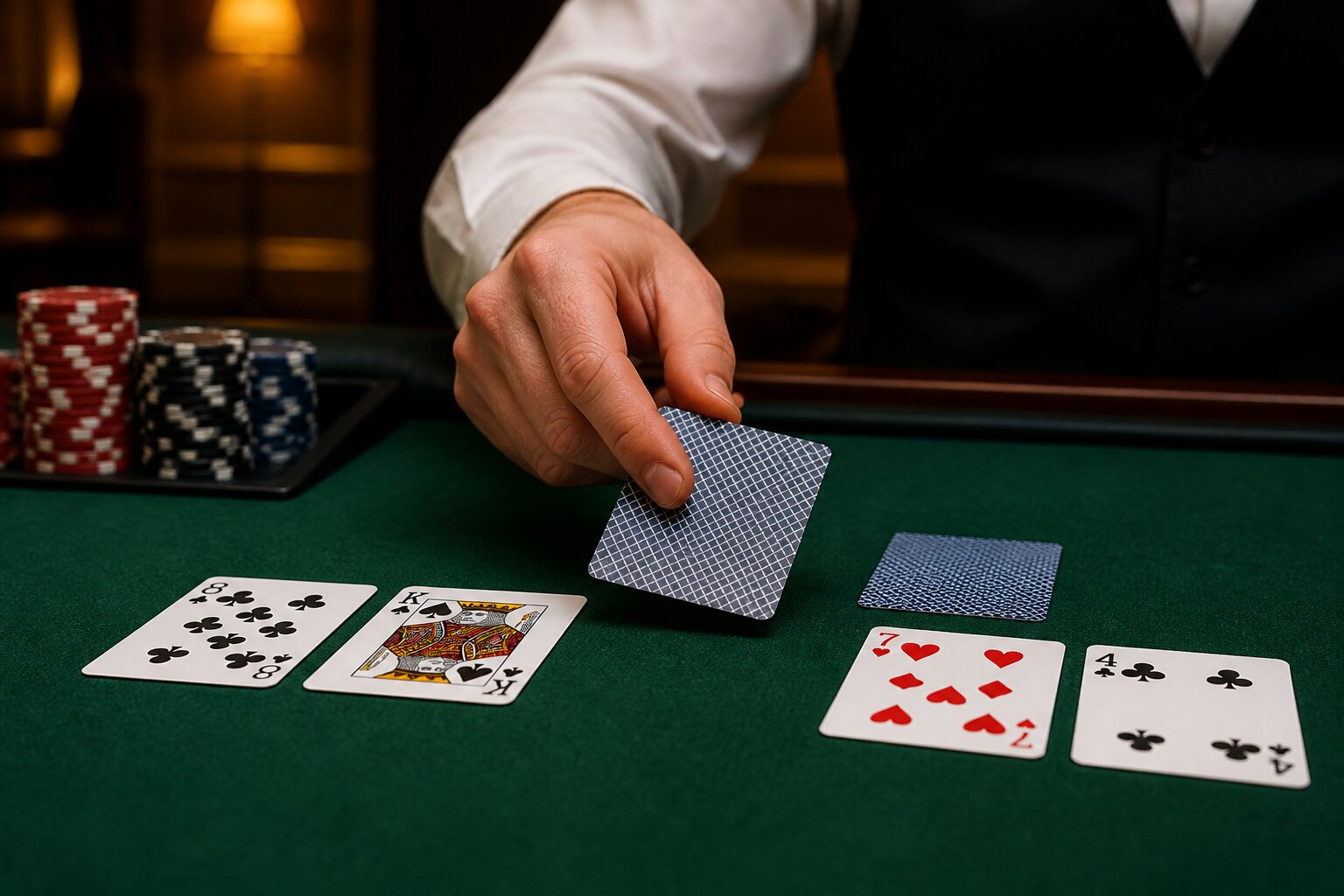
Ever wondered what would happen if you could swap cards between two blackjack hands? That is the central twist behind Blackjack Switch. It takes the familiar flow of blackjack and adds a strategic choice at the start of each round that changes how every decision plays out.
This version keeps the core aim—getting closer to 21 than the dealer without going over—but asks players to think in pairs, weighing two hands together rather than treating them in isolation. Read on to learn how the switch works, which rules change, and how those changes affect play.
What Is Blackjack Switch?
Blackjack Switch is a modern variation of traditional blackjack. The main idea is simple: you play two hands at once and may swap the top cards between them after the initial deal. That single option creates a fresh layer of strategy, because a well-timed switch can turn two mediocre hands into one strong contender and a sensible backup.
To begin each round you place two equal bets, receive two face-up hands of two cards, and then decide whether to switch the top cards. After the switch decision you proceed to play each hand separately, then the dealer completes their hand and outcomes are settled. The switch introduces different trade-offs from classic blackjack, so familiar decisions like doubling or splitting need to be reconsidered in this context. Next, we’ll look at the concrete differences that set Switch apart from the standard game.
Playing Two Hands
In Blackjack Switch you must play two hands at the same time, placing equal bets on each. That requirement changes the way bankrolls are managed and how risk is assessed, because each round exposes you to two outcomes rather than one.
Playing both hands together also affects tactics. For example, a player might accept a modest result on one hand to maximise the potential of the other after a swap, or the opposite approach if one hand is already strong. This pairing of decisions creates more frequent, compact decision-making than single-hand blackjack, and it rewards players who can think across both hands. The next section explains how the actual swapping of cards works and why it matters.
Switching Cards
The switch option lets you swap the top card from each of your two hands immediately after the initial deal. That simple mechanic can change the composition of both hands and influence later actions such as hitting, standing, doubling or splitting.
For example, imagine one hand shows a 10 and a 6 while the other shows an Ace and a 5. Swapping the top cards could produce a 10 and Ace (a 21) and a 6 and 5 (11), which might be preferable to the original pairings. Because both hands remain active, the switch decision weighs potential gains across both outcomes rather than focusing on a single hand.
Dealer Rules and Pushes
To balance the advantage the switch gives players, dealer rules are adjusted. If the dealer finishes with a total of 22, most active player hands (except natural blackjacks) push, meaning the player’s original stake is returned rather than being paid or lost. This rule reduces the benefit of forcing the dealer into a bust-like total, and it shapes how aggressive players can reasonably be with switching and doubling.
Blackjack Payouts
Natural blackjacks pay differently in Blackjack Switch. Where classic blackjack commonly pays 3:2 for a natural, Switch pays even money for naturals and other standard wins. That reduced payout reflects the extra edge the switch can supply, so players should factor it into both short-term expectations and longer-term bankroll planning.
House Edge
Because of the switch option and the altered dealer and payout rules, the house edge in Blackjack Switch is generally higher than in standard blackjack. Exact figures vary with rule sets and deck counts, but the combination of rules is designed to offset the benefit players gain from swapping cards.
These differences change the feel of the game, so the next section walks through a typical round to show how those rules interact in practice.
Step-by-Step Guide: How to Play Blackjack Switch
Begin a round by placing two equal bets, one for each hand. The two stakes together form the round’s total exposure.
You are then dealt two cards to each hand, all face-up. With both hands visible you decide whether to swap the top card from each hand. That choice is a single, pivotal moment: after it is resolved you continue by playing each hand in turn, taking the usual actions such as hit, stand, double down, or split where permitted.
Each hand is completed fully before the next is played. Once the player actions finish, the dealer reveals and plays their hand according to the table rules, typically standing on 17. Settlement follows: winning hands pay even money, naturals also pay even money, and if the dealer totals 22 most non-natural hands push and the stake is returned.
Seeing how these rules affect specific situations will help make the strategy clearer, so the next section explains the unique rules in more detail with examples.
Understanding the Unique Rules of Blackjack Switch
Blackjack Switch contains a handful of rule changes that directly shape strategic choices across the round. Knowing how each one operates helps in judging when a swap is worthwhile and how much to risk on each hand.
What Is the ‘Switch’ Rule?
The switch rule allows swapping the top cards between your two hands immediately after the deal. It provides a short window to reconfigure both hands before any hits, stands or other plays occur. Because both hands remain active, the swap is evaluated for combined expected value rather than for a single hand’s improvement.
For instance, trading a 5 and a 6 between a hand of 8 and a hand of 10 can produce a stronger distribution overall. The decision relies on reading both hands together and anticipating how the dealer’s potential totals might interact with each resulting hand.
How Does the Push on 22 Rule Work?
When the dealer finishes with 22, most player hands push rather than win or lose; the only exception is a player natural, which is still a winning outcome. This rule effectively removes the benefit players would normally enjoy when the dealer busts, and it becomes particularly relevant when deciding whether to push for a higher total on either hand or to settle for safer holdings.
For a player facing hands of 18 and 16, the prospect of the dealer reaching 22 can change the attractiveness of aggressive plays. The push rule reduces the upside of forcing the dealer’s total higher, which in turn should influence switching and doubling choices.
Are There Special Payouts in Blackjack Switch?
Standard wins and naturals pay at even money in most implementations of Blackjack Switch. There are usually no additional core-game side bet payouts required to play, although optional side bets sometimes appear on the layout as separate wagers. Because naturals pay 1:1 rather than 3:2, the value of chasing a natural is lower than in classic blackjack, and that recalibration affects how hands are evaluated shortly after a swap.
With those special rules clarified, the table layout makes more sense; the next section explains where bets and cards appear and how the surface design supports the game’s mechanics.
Blackjack Switch Table Layout Explained
The table is arranged to support the two-hand requirement and make the switch decision clear. Players have two adjacent betting spots, each holding one of the required equal wagers. Above each betting spot the cards for that hand are placed face-up so the player can assess both hands at once.
A typical table also shows space for the dealer’s cards and a central area where optional side bets may be placed. Rules reminders such as even-money payouts and the dealer 22 outcome are often printed on the cloth so they are visible during play. This layout ensures players know where to put chips and where to find each hand while making the switch decision.
Understanding the table helps new players feel confident enough to try a round, and the next section looks at whether this version suits beginners.
Is Blackjack Switch Suitable for Beginners?
Beginners can learn Blackjack Switch, but there is an extra layer to understand compared with classic blackjack. The basic objective remains the same—get closer to 21 than the dealer without going over—but managing two hands and deciding whether to switch top cards adds complexity.
New players benefit from starting with low stakes or free-play versions to become comfortable with how one swap changes two hands. It also helps to practice reading dealer totals and imagining outcomes before committing to larger bets. A single session of modest play will usually reveal the rhythm of decisions and how the push-on-22 rule affects outcomes. If you feel ready, try a few practice rounds to build confidence before increasing stakes.
Read on for practical tips that can make the experience more enjoyable and help protect your session funds.
Key Tips for Enjoying Blackjack Switch
- Become familiar with the switch rule and the dealer 22 outcome so decisions feel intuitive rather than reactive.
- Try free-play or low-stakes games to see how switching alters typical hand patterns.
- Manage your bankroll with the understanding that each round uses two equal bets; track total exposure rather than individual stakes.
- Take regular breaks to keep concentration sharp and avoid fatigue.
- Use only funds you can afford to lose and set a session limit before you start.
- If available, make use of responsible-play tools provided by the site or venue to control deposits and playing time.
These pointers aim to keep the experience controlled and enjoyable while you explore the strategic differences this variant offers. If you want to try it yourself, our site lists available tables and stake ranges to help you find a suitable game.
Explore Casino Games at Online Slots UK
We welcome you to discover our selection of casino games in a way that suits you. Whether you are new or simply looking for a change of scenery, we are here for you to enjoy at your own pace.
Getting started with us is straightforward: just create an account, make a deposit and you are ready to begin playing. We look forward to having you with us.
**The information provided in this blog is intended for educational purposes and should not be construed as betting advice or a guarantee of success. Always gamble responsibly.